Fed's 2027 FOMC Calendar Sets the Clock for Treasury Yields
The Fed released a revised 2027 FOMC schedule with an October strategy meeting, and the 30-year auction cleared at 5.441% to end a $125 billion refunding.
WASHINGTON — The Federal Reserve on Thursday published a revised tentative schedule of Federal Open Market Committee meetings for 2027, giving bond investors the calendar against which Treasury yields will be priced through next year. The release, issued at 12:45 p.m., lists eight two-day meetings in 2027 and one in January 2028.
The Committee said it will announce its policy decision as usual on the second day of each meeting, with one exception: the October session is set aside for broad discussion of monetary policy strategy.
The 2027 dates
All meetings run Tuesday and Wednesday:
- January 26-27
- March 16-17
- April 27-28
- June 8-9
- July 27-28
- September 14-15
- October 26-27 (strategy discussion)
- November 16-17
- January 25-26, 2028
The Fed describes the schedule as tentative, and the release gives no detail on what was revised from the earlier version. The dates themselves are what matter for markets.
What the October slot means
Because the October 26-27 meeting is dedicated to strategy, the Committee will not announce a rate decision that week. That leaves seven policy-decision meetings in 2027. Counting decision day to decision day, the gap from September 15 to November 17 is 63 days, against 42 to 49 days between the other 2027 decisions. The gap from November 17 to the January 2028 decision on January 26 runs 70 days.
A strategy-focused meeting is a different kind of event for the bond market, which usually trades the Committee’s rate decisions and statements. The Fed’s release says only that the meeting will address broad policy strategy; it does not say what outcomes, if any, will follow.
Supply week closes at the long end
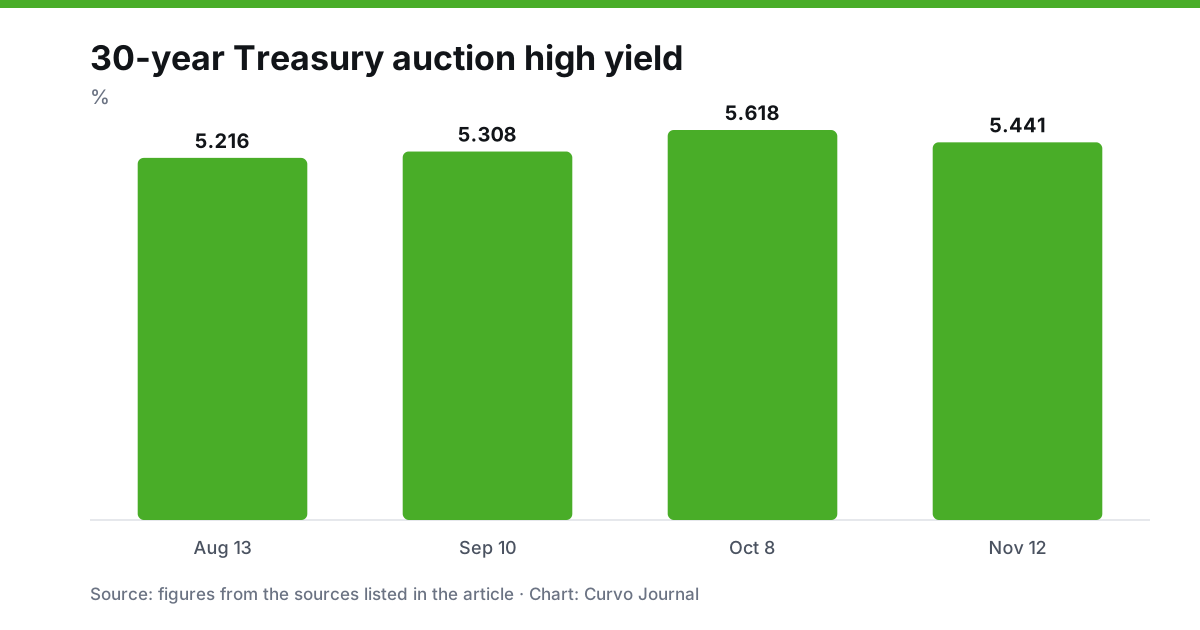
The calendar arrived on the same afternoon the Treasury finished its refunding. The $25 billion 30-year bond auction cleared at a high yield of 5.441% with a 5.375% coupon and a bid-to-cover ratio of 2.36. It is a new issue, due November 15, 2056, and 21.29% of competitive bids were awarded at the high yield.
Indirect bidders took $17.0 billion, direct bidders $5.1 billion and primary dealers $2.8 billion, which left dealers with about 11% of the offering. August’s 30-year sold at 5.216% with a 2.39 cover, so the November sale cleared roughly 23 basis points higher with slightly thinner demand. The October 30-year sale was a reopening of an older bond and priced at 5.618%, which makes it a less direct comparison.
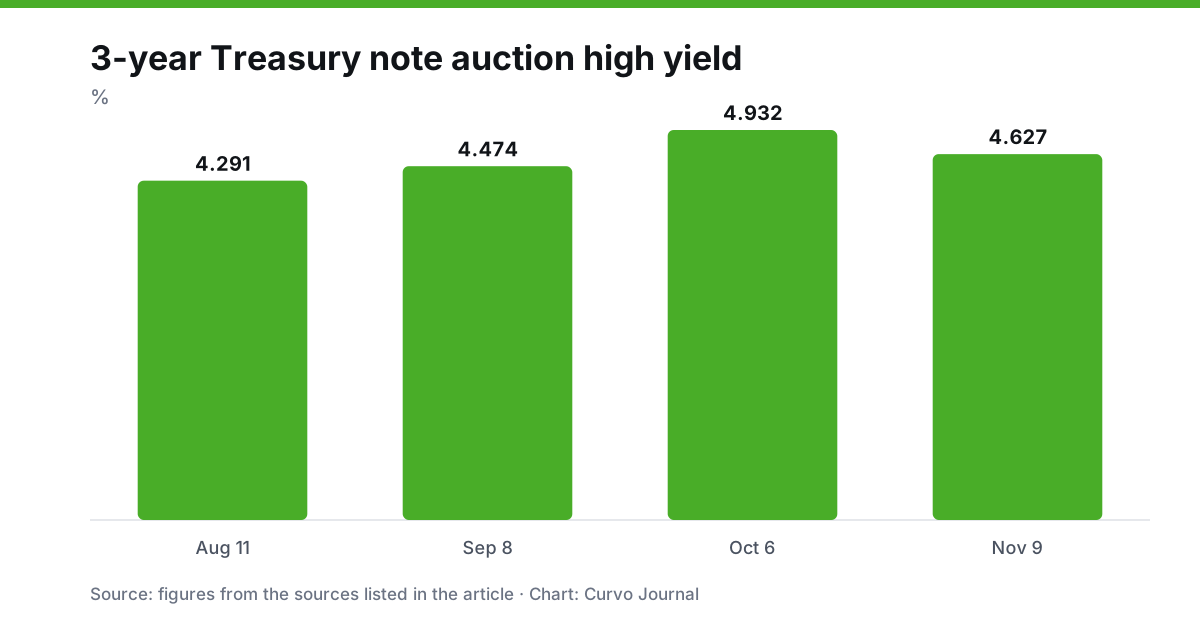
Taken with Monday’s 3-year at 4.627% and Tuesday’s 10-year at 5.020%, the refunding priced the curve at a rising slope from the front to the back: about 39 basis points between the 3-year and 10-year auctions and a further 42 between the 10-year and the 30-year, though the auctions cleared on three different days with different data in between.
What to watch
The Fed’s calendar is fixed; the data that feed into it are not. Inflation reports and the Committee’s own projections will shape the path of rates through those 2027 dates, and Treasury supply will keep competing for demand. The October strategy session is the one date on the calendar with no decision attached, and what the Committee says about it will be read closely.
Prepared with AI assistance from public sources and reviewed under our editorial policy. Not investment advice.